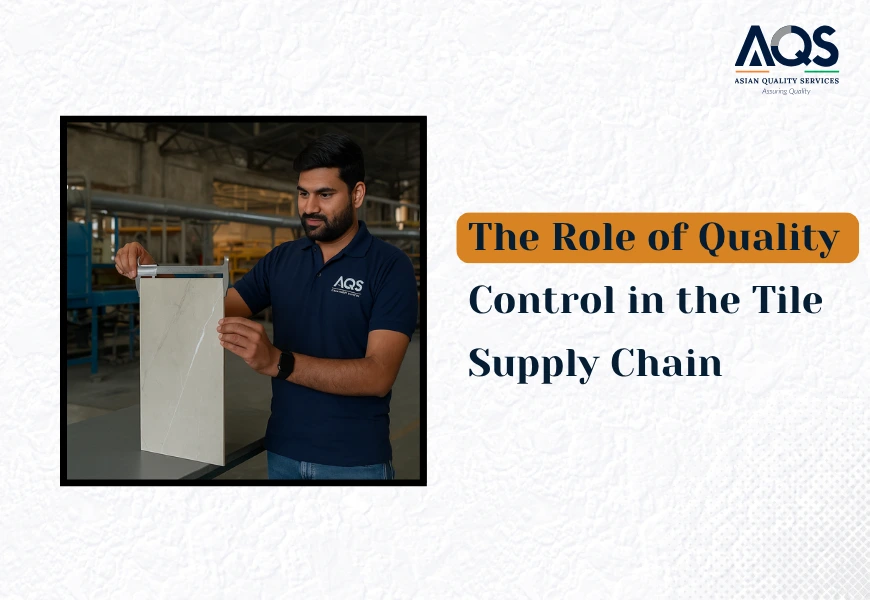
Consistency is essential for global tile sourcing. Importers/Distributors require that every carton of tile match the approved sample, regardless of the tile’s shade, size, or finish. But there are many points in the manufacturing of tile (raw material processing, kiln firing, grading, packing, and loading) where variation can happen.
Tile Quality Control provides the framework to safeguard the standards of the tile throughout all phases of production until it arrives at the final destination.
In the absence of defined quality checkpoints, even small variations in the product will magnify throughout larger shipments.
Reflected in a highly competitive marketplace, one very small variability between batches of tile will create installation problems, returns, and/or long-term damage to a company’s reputation.
Mapping Tiles Quality Control Across the Supply Chain
While most assume that QC is only for the final inspection, tile QC affects a wide range of elements of the supply chain, from raw material selection to container sealing. The effect of QC goes well beyond identifying visible defects; it also influences the level of discipline in production, supplier accountability, and shipment reliability.
Once importers can identify how QC fits into the tile supply chain, they are able to move from being reactive to being proactive in their approach to risk prevention.
Step-by-Step Impact of Tile Quality Control
Quality control that is effective does not exist in isolation; it is a series of structured checks that must be conducted at critical points of production and logistics, and there shall be evidence of multiple steps taken that will create the quality assurance of an end product or shipment.
1. Production-Level Controls That Define Final Quality
Consistency begins when the base materials are used in tile manufacturing. Variations in their clay composition, glaze formulation, or firing temperature can affect strength, absorption rate, and finish.
Tile quality control at this stage focuses on:
- Monitoring production parameters
- Verifying kiln temperature consistency
- Reviewing batch segregation practices
Early oversight reduces the likelihood of large-scale defects later in the process.
2. Calibration Standards That Influence Installation
Tile installations demand uniformity. Even slight size variations can create alignment issues during installation, particularly with large-format tiles.
Tile Quality control procedures typically assess:
- Length and width tolerances
- Thickness consistency
- Edge straightness and squareness
Maintaining dimensional accuracy ensures smoother installation and reduces on-site complaints.
3. Managing Finish and Shade Uniformity
Appearance directly affects customer satisfaction. Chips, glaze inconsistencies, scratches, or shade differences often become visible only after installation.
Tiles quality control teams evaluate:
- Surface defects
- Finish uniformity
- Shade variation within batches
- Texture consistency
Documented visual checks help buyers approve shipments with greater confidence.
4. Performance Verification Beyond Appearance
Beyond appearance, tiles must meet durability expectations. Depending on their intended application, floor and wall tiles require different strengths and absorption characteristics.
Performance-related checks may include:
- Water absorption testing
- Breakage resistance evaluation
- Surface hardness assessment
These tests confirm whether the product matches the Tile technical specifications agreed upon during procurement.
5. Packaging Controls That Protect Shipment Integrity
Even well-manufactured tiles can suffer damage during transit. Weak cartons, improper pallet stacking, or insufficient protective layering increase breakage risk.
Tile quality control at the packaging stage typically includes:
- Carton strength verification
- Pallet stability checks
- Label accuracy confirmation
Attention to packaging details reduces claims and disputes after shipment arrival.
6. Dispatch Oversight Before Container Sealing
The final link in the supply chain is container loading. Poor weight distribution or careless stacking can undo earlier quality efforts.
Supervised loading ensures:
- Container cleanliness
- Proper pallet placement
- Balanced weight distribution
- Safe stacking practices
This stage protects product integrity during long-distance transportation. Utilising quality oversight services tends to add greater value to your Organisation. And if you can use it consistently across these interconnected phases, as opposed to using it at one point in time, you make the most out of it.
The Strategic Value of Tile Quality Control
While inspection has a relatively low upfront investment compared to the weight of rejection or installation failure, performing tile quality control is essential to maintaining your company’s branding with customers.
The competitive landscape demands consistent products, which are critical for securing repeat business for your organization. Therefore, quality control serves not only as a means of detecting defects but also plays a huge role in stabilizing the supply chain.
Conclusion
Every step is critical to guarantee that the product is shipped in accordance with how it was intended to be shipped.
By partnering with a well-structured quality assurance provider like Asian Quality Services, importers sourcing from India and other manufacturing centres will have systematically covered all parts of the inspection process, from production monitoring (quality) to containerization (load verification) by having the same tile quality control provider cover the entire supply chain.
This strategy facilitates lower risk for businesses while helping to create predictable outcomes and protect their reputation in the marketplace through quality assurance accountability.
FAQs
The main focus of tile quality control is to ensure that the tiles meet agreed specifications, performance standards, and buyer requirements before shipment. The goal is to prevent defective or non-conforming tiles from reaching the customer and to reduce financial and reputational risks in international trade.
In the tile supply chain, the quality control process typically includes Specification Review, During Production Inspection, Final Random Inspection, and Container Loading Supervision.
Professional tile inspectors use specialized tools such as measuring tapes, Straight edges, Thickness gauges, weighing scales, Water absorption testing equipment, and Moisture meters.
Yes, an experienced third-party QA company such as AQS can manage the entire process - from factory audit and during-production checks to final inspection and container loading supervision.
Poor quality control often leads to shipment disputes, rejected goods, payment delays, and trust issues between buyer and supplier. Over time, repeated quality failures can damage partnerships, increase negotiation conflicts, and force buyers to switch suppliers. Strong tile quality control builds transparency and long-term cooperation.
Quality control protects your brand by ensuring customers receive consistent, defect-free tiles. For importers, proper inspection reduces the risk of retail complaints, distributor returns, negative reviews, and warranty claims.