When importing tiles, pricing is always a key concern. Buyers compare factory rates, freight charges, duties, and logistics. Yet one question often comes late in the planning stage: how much should you budget for tile inspection services?
The answer is not always a fixed number. Inspection costs vary depending on shipment size, inspection scope, location, and urgency. Understanding what influences pricing helps importers plan better and avoid unexpected expenses.
Average Cost of Tile Inspection Services
Tile inspection services are typically priced per man-day. In India, a standard pre-shipment inspection for a single container usually represent only a small percentage of the total shipment value, depending on factory location, shipment complexity, and inspection scope. Additional services such as container loading supervision or multi-stage inspections may increase the total cost.
What Tile Inspection Services Include
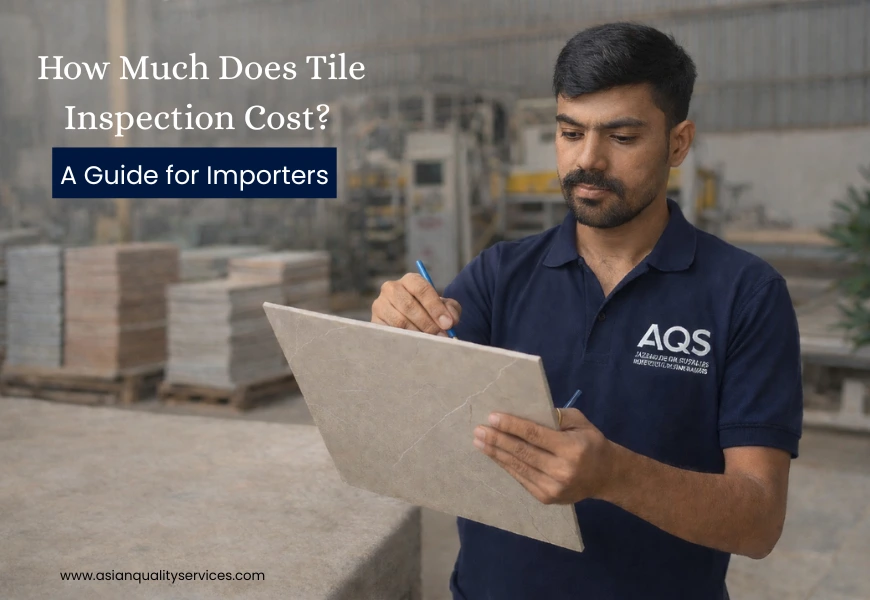
Many buyers assume inspection is just a quick factory visit. In reality, tile inspection services involve structured sampling, surface checks, dimensional verification, packaging review, and container loading supervision.
So the cost is not simply for someone to “look” at tiles. It reflects expertise, standardized quality checks, time on-site, and detailed reporting that protects your shipment before dispatch.
Let’s look at what actually determines the price.
- Visual inspection for surface defects
- Measurement of tile size and thickness
- Shade and batch consistency checks
- Carton and packaging verification
- Container loading supervision
- Photo documentation and inspection reports
What Really Drives the Cost of Tile Inspection?
Inspection pricing is not random. It is usually structured per man-day, per shipment, or per container, depending on the required scope. Before breaking down the details, it helps to remember that tile inspection services cost is directly linked to the time, coverage, and technical depth involved.
1. Inspection Stage: Where Cost Begins
The stage of inspection affects pricing.
- Pre-production inspection checks raw materials and setup.
- During production inspection monitors manufacturing consistency.
- Pre-shipment inspection evaluates finished goods before dispatch.
- Container loading supervision ensures correct stuffing and handling.
A single-stage pre-shipment inspection is typically more economical than multi-stage monitoring.
2. Volume and SKU Complexity
Larger shipments require broader sampling. A single container requires less inspection time than multiple containers. Orders with many SKUs or design variations also increase sampling requirements. Since inspection follows statistical sampling standards, a greater variety means more checks. More time on-site naturally influences cost.
3. Product Complexity and Technical Checks
Different tile categories require different checks. Polished vitrified tiles, ceramic wall tiles, large-format slabs, and outdoor pavers each have unique inspection criteria. Tests may include:
- Dimension and thickness measurement
- Surface defect evaluation
- Shade consistency checks
- Water absorption testing
- Carton strength verification
The more technical the evaluation, the more detailed the inspection process becomes.
4. Factory Location and On-Site Logistics
Inspection cost can vary based on where the factory is located. Major manufacturing hubs allow easier inspector availability. Remote areas may involve additional travel time and related expenses. These logistical considerations are often reflected in service pricing.
5. Last-Minute Bookings and Scheduling Pressure
Last-minute inspection requests can increase fees. If an inspection must be scheduled urgently, agencies may need to rearrange manpower or work outside standard schedules. Planning inspections in advance usually keeps costs stable.
6. Reporting Depth and Documentation Scope
Standard reports include defect summaries, quantity verification, and photo documentation. However, customized formats, buyer-specific templates, or additional compliance documentation may add to the final cost. The depth of reporting directly impacts time spent on documentation.
What Importers Typically Pay for Tile Inspection Services
In India, tile inspection services are generally priced per man-day. For a standard pre-shipment inspection of a single container, the cost usually represents only a small percentage of the total shipment value.
For higher-value consignments, inspection cost becomes even smaller relative to the financial exposure being protected.
Professional agencies such as AQS typically structure pricing transparently based on shipment scope, container count, and location. This helps importers forecast expenses clearly without hidden charges.
Is Tile Inspection a Cost Line Item or Risk Control Tool?
At first glance, inspection may appear as an added procurement cost. But the real comparison is not between inspection and no inspection. It is between controlled prevention and uncontrolled risk.
A rejected shipment can lead to:
- Port storage charges
- Re-export costs
- Replacement production delays
- Client dissatisfaction
Compared to these potential losses, inspection fees remain predictable and manageable.
Where the Real Financial Risk Lies
Is it better to save on tile inspection services today and accept the risk, or invest upfront and reduce uncertainty?
In most cases, prevention costs significantly less than correction.
Inspection cannot guarantee perfection, but it greatly reduces the probability of large-scale quality issues reaching destination ports. Identifying problems at the factory stage allows corrective action before the shipment leaves India. For experienced importers, inspection becomes part of routine supply chain planning rather than an optional service.
Wrap Up
Instead of focusing on the cost of inspection, you should focus on how much you’re willing to spend to mitigate risk. Working with an organized and transparent inspection provider like Asian Quality Services, Importers can align their needs for tile inspection services with their expectations for shipment and budget.
With a focus on quality control from the start, inspection can be a safeguard against loss of margins, missed deadlines, and risk to your brand image, as opposed to just being another cost that you need to include in your calculation.